112 bps of rate compression across 3 quarters
The platform-wide quarterly average sat at in Q2 2025 and troughed at in Q1 2026, a 112 bps decline over three consecutive quarters. Q2 2026 closed at 6.62%, up 28 bps from Q1's trough.
Average rates, leverage, and lender activity drawn from real term sheets submitted on the Gumption platform.
Report Period
April - June 2026
Data History
May 2024 - June 2026
Active Pipeline
$642.8M / 97 Deals
Lender Network
700+ Financial Institutions & Funds
Section 01
What every active CRE operator should know heading into Q3 2026, sourced exclusively from deal and term sheet data processed through the Gumption platform.
The platform-wide quarterly average sat at in Q2 2025 and troughed at in Q1 2026, a 112 bps decline over three consecutive quarters. Q2 2026 closed at 6.62%, up 28 bps from Q1's trough.
Banks, credit unions, and insurance companies averaged combined in Q2 2026. Private lenders averaged , a 329 bps premium reflecting transitional, higher-leverage, and time-sensitive deals that institutional lenders won't underwrite.
With conventional financing, industrial averaged in Q2 2026, the lowest of the major tracked asset classes. Multifamily followed at . Land was the most expensive at 7.50%, followed by hospitality at 7.10%.
New construction averaged in Q2 2026, the highest rate of any loan type, with an average LTC of . Rates have compressed roughly 175 bps since the Q3 2024 peak of 8.75%, and lenders continue to submit competing term sheets on ground-up deals.
Section 02
Average interest rates on term sheets submitted through the Gumption platform from May 2024 through June 2026. Data reflects actual lender offers, not indicative quotes or rate sheets.
Average Interest Rate · All Property Types
6.62%Q2 2026 Avg
Retail
Average rate trend
Industrial
Average rate trend
Multi-family
Average rate trend
Section 03
A breakdown of term sheets submitted through the Gumption platform by lender category, including banks, CMBS conduits, credit unions, life companies, and private debt funds.
Rate by Lender Type
Monthly trend · Bank and Credit Union
Average Rate by Lender Category · Q2 2026
LifeCo 6.30% · CU 6.42% · Bank 6.69% · Private 9.76%
Most Active Category
Community and regional banks continue to submit the highest volume of term sheets across all property types on the platform.
Lowest Avg. Rate
Life insurance companies offer some of the thinnest spreads in the market, but are very conservative regarding the assets and deal profiles they will finance.
Most Competitive
These asset types attract the highest number of competing term sheets per deal, where a competitive process can deliver the most value.
Deal Spotlight
Real transactions closed through the Gumption platform in Q2 2026, showing how the data translates into outcomes for active sponsors.
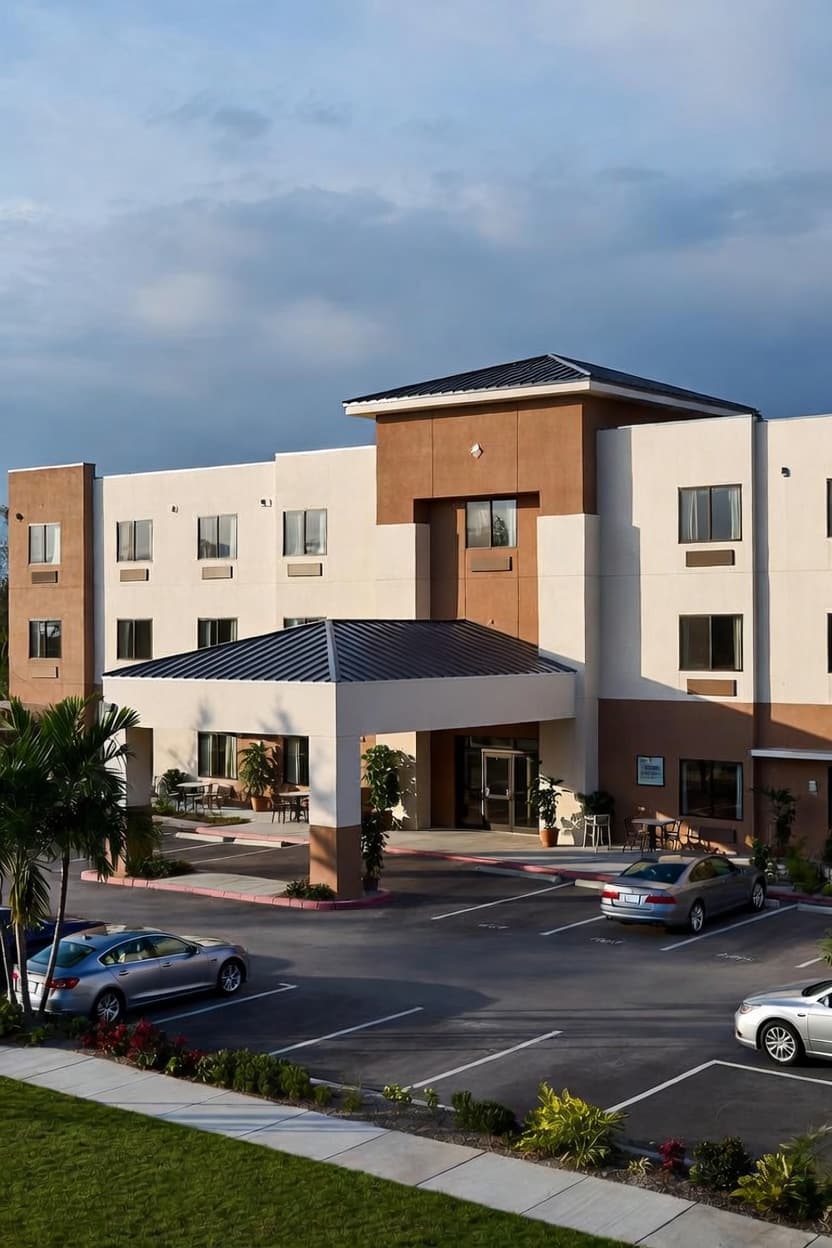
A southeastern development firm sought construction financing for a 122-room extended-stay hotel in the Four Corners area of Central Florida. The project carried a stabilized value of roughly $19M against a requested loan of $9.2M. Five lenders submitted formal terms across community banks and credit unions despite cautious hospitality appetite.
Loan Amount
$9.2M
Rate
SOFR + 2.35%
Loan Term
10 years
Amortization
25 years
Max LTC
65%
Origination
0.50%
A Southeast-based development firm sought to refinance a newly delivered drive-thru Starbucks secured by a new 10-year absolute NNN corporate lease. The property carried a stabilized value of roughly $3.8M against a requested loan of $2.45M. More than a dozen lenders were engaged and five submitted formal term sheets.
Loan Amount
$2.45M
Rate
5Y UST + 2.05%
Loan Term
5 years
Amortization
30 years
Max LTV
75%
DSCR
1.10x

Alabama and Florida-based real estate operators sought to refinance a 117-unit SFR portfolio originally acquired in 2022. The portfolio generates $1.2M in gross rental income and $700,000 in NOI. By running banks, credit unions, and private lenders simultaneously, Gumption maintained momentum and prevented any single lender hesitation from stalling the deal.
Loan Amount
$7.035M
Rate
6.49% fixed
Loan Term
5 years
Amortization
20 years
Max LTV
75%
Lender Fee
0.50%

A well-established New York-based sponsor group was seeking high-leverage financing for a PetSmart net lease acquisition. While many local lenders competed for the project and provided aggressive quotes, the winning group was a credit union that was able to deliver the highest leverage and the lowest rate of them all.
Loan Amount
$3.12M
Rate
5.83% fixed
Loan Term
10 years
Amortization
25 years
LTC
80%
Lender Fee
1.00%

Section 04
Private credit for commercial real estate is a swiftly-changing landscape. Here's what you need to know in 2026.
In years past, private money for CRE was the domain of hard money lenders charging interest in the high teens for special situations and speedy closes. But in recent years, private credit has grown as an emerging source of funds filling many major voids in CRE debt capital markets. Something that may surprise seasoned CRE professionals is that private lenders in some cases are pricing on-par or even more aggressively than their bank counterparts. And when their rates are higher, they can make up for it by offering higher leverage to experienced borrowers and can close much faster than conventional lenders.
Private credit utilizes alternative underwriting methods to accelerate the time to close, sometimes able to fund without an appraisal, and using streamlined credit committee processes to get to an approval in a fraction of the time.
Debt funds still do scrutinize the sponsors of their deals, but they are more concerned with experience and track record than personal balance sheets and tax returns. This flexibility allows them to work with a wider pool of borrowers.
Private lending can still price very aggressively in terms of rate. For permanent financing on smaller multifamily assets, we are consistently seeing pricing in the range of 6.0-7.5%, with the lowest rate we've seen this year coming in at 6.25% for a stabilized 8-unit multifamily asset.
Private credit also sticks out as a competitive option for ground-up construction. Debt funds are able to provide high-leverage construction financing, especially in multifamily and STNL. For quality build-to-suit projects for national tenants, some debt funds even offer 90-100% construction financing.
Some sponsors prefer to use private debt funds as they can provide more flexibility with the finer terms of the construction note. Some debt funds offer pari passu funding, allowing borrowers to inject their equity in parallel with construction draws rather than upfront, preserving liquidity and boosting project IRRs. Others offer white-glove servicing and draw processes, with one of our lending partners boasting to us that their in-house construction management team funds draws within 48 hours, as opposed to the weeks that it may take for a traditional bank to do so.
Deal Spotlight
We recently took on a deal that was a prime example of why some borrowers would want to use private credit for their projects.
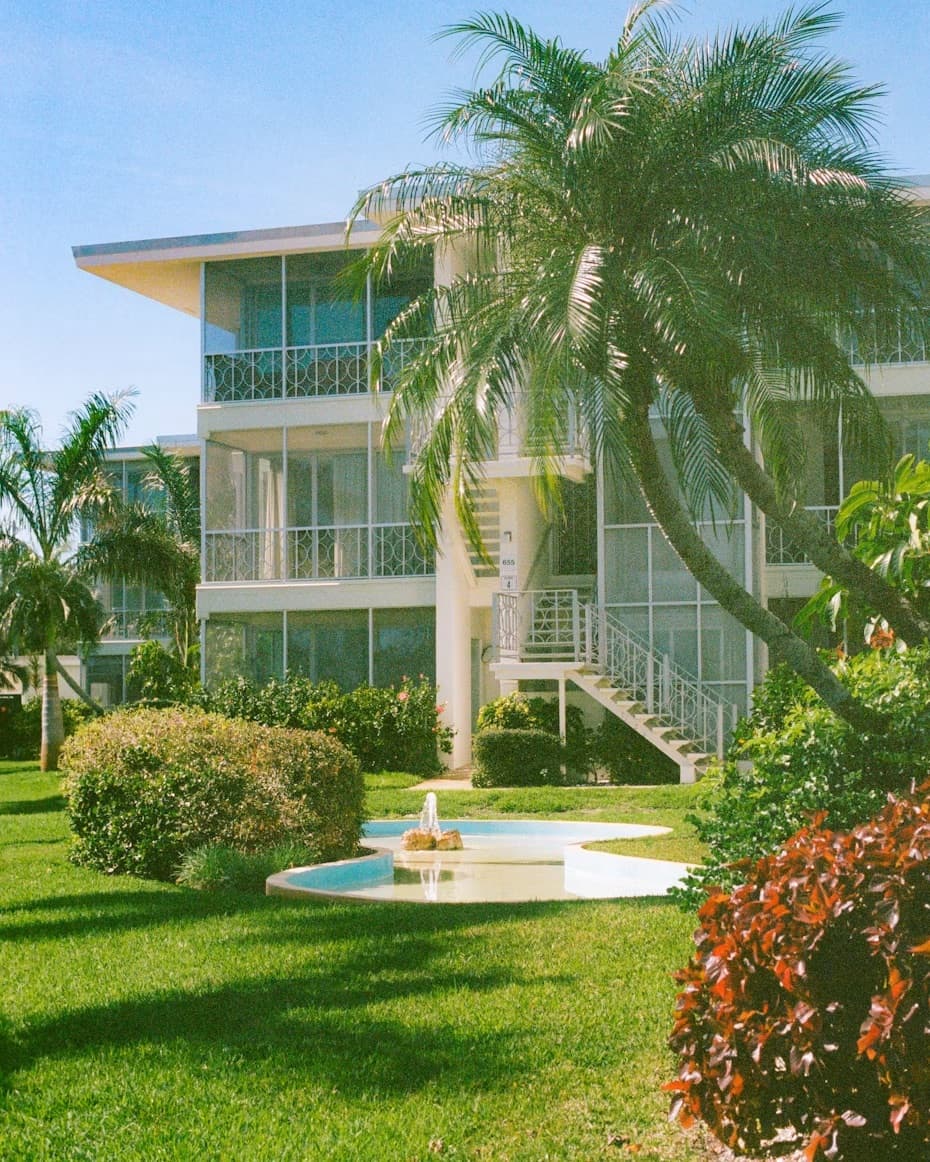
Florida sponsors engaged us to source debt for a multifamily construction project. While they had ample liquidity and equity in the project, they were seeking a non-bank solution that could provide flexibility with day 1 disbursements as well as a speedy draw process. Our network of debt funds provided several competitive options, with the best willing to accommodate their structure as well as providing a relatively low interest rate.
Loan Amount
$5.66M
Rate
8.99% fixed
Loan Term
18 months
Interest-Only
18 months
Max LTC
73%
Lender Fee
2.00%
Section 05
Maximum and average offered LTV and LTC by property type, with loan-type leverage shown below for context. Figures reflect what lenders actually offered, not maximum published leverage policies.
LTV by Property Type
Max LTV vs. Average LTV
LTC by Property Type
Max LTC vs. Average LTC
| Loan Type | Avg Max LTV | Highest Max LTV | Avg Max LTC | Highest Max LTC |
|---|---|---|---|---|
| Acquisition | 74% | 85% | 75% | 85% |
| New Construction | 72% | 85% | 74% | 90% |
| Refinance | 72% | 85% | 75% | 90% |
| Bridge | 63% | 75% | 63% | 75% |
Section 06
Conventional rate and leverage comparison across asset classes. The spread between the highest- and lowest-rate property types reached 150 basis points in Q2 2026.
Q2 2026 Avg. Rate by Asset Class
Ranked lowest to highest
Avg. LTV by Property Type · All-Time
Based on all term sheets submitted through the platform
| Property Type | Avg. Rate Q2 2026 | Lowest Rate Q2 2026 | Avg. LTV |
|---|---|---|---|
| Owner-Occupied CRE | 6.00% | 5.30% | 73.0% |
| Mixed Use | 6.30% | 5.80% | – |
| Mobile Home Park | 6.36% | 6.00% | 71.0% |
| Storage | 6.50% | 6.00% | 71.7% |
| Industrial | 6.51% | 5.90% | 71.1% |
| Multi-family | 6.57% | 6.00% | 72.7% |
| Retail | 6.59% | 6.00% | 71.9% |
| Office | 6.66% | 6.30% | 71.6% |
| Healthcare | 6.68% | 7.30% | 76.3% |
| Residential | 6.71% | 6.40% | 77.0% |
| Hospitality | 7.10% | 6.60% | 66.1% |
| Land | 7.50% | 6.80% | 60.3% |
Methodology
All data in this report is sourced from the Gumption platform. Rate and spread figures reflect actual term sheets and indicative quotes submitted by lenders in the Gumption network, not published rate sheets. Data is anonymized and aggregated; no individual borrower or lender is identifiable from any figure in this report.
The Gumption CRE Lending Report is published quarterly. Figures are subject to revision as additional data is received. This report is provided for informational purposes only and does not constitute investment, legal, or financial advice. Copyright 2026 Gumption. Not for redistribution without written permission.